How to Protect Your Seawall, Dock, and Boat Lift — and What to Inspect After a Storm
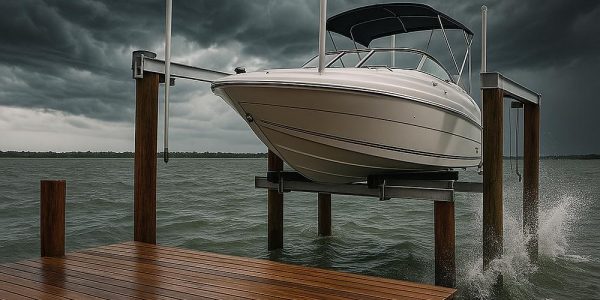
Seawalls, docks, and boat lifts take the brunt of hurricane season along South Florida’s waterways.
South Florida’s waterfront lifestyle comes with a trade-off: the same water views that make Fort Lauderdale, Pompano Beach, Boca Raton, and Delray Beach so desirable also put your seawall, dock, and boat lift directly in the path of hurricane season every year. Storm surge, wind-driven waves, and rapid tidal shifts put more stress on marine structures in a single storm than they typically see in years of normal use.
Whether you’re bracing for the next system or walking your property the morning after one passes, knowing what to check — and when to call in a professional — can mean the difference between a quick repair and a full seawall replacement.
Why Hurricane Season Is So Hard on Waterfront Structures
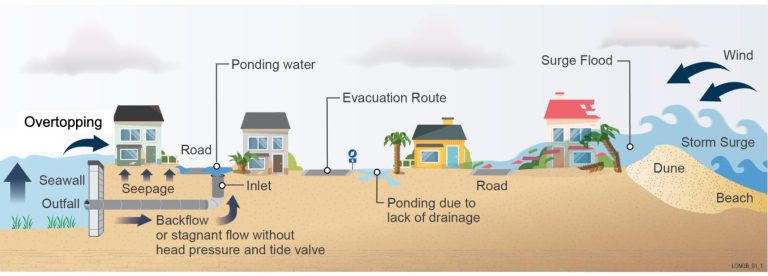
Seawalls, docks, and boat lifts are built to handle everyday wave action and tidal movement, but hurricanes push conditions far outside that normal range. Storm surge can raise water levels several feet above normal, submerging areas of a seawall that are never usually underwater. Wind-driven waves add repeated impact force, and the rapid rise and fall of water during a storm creates pressure differentials that push against the back of a seawall — sometimes strong enough to cause erosion, cracking, or even collapse.
Docks and boat lifts face their own risks: high winds and floating debris can rack pilings out of alignment, snap boards, or damage lift motors and cables. Even structures that look fine on the surface can have hidden stress fractures or shifted footings that only reveal themselves months later.
Pre-Hurricane Season Checklist
The best time to inspect your seawall and dock is well before a storm is on the radar. Here’s what to look at:
Seawall condition
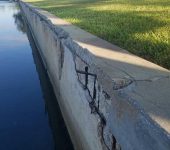
- Check for visible cracks, spalling (crumbling concrete), or exposed rebar on concrete seawalls.
- Look for gaps, voids, or soil loss behind the wall — a sign that soil is washing out from underneath, which weakens the structure from the back.
- Inspect vinyl seawalls for warping, bulging, or separation at the panel joints.
- Check cap and tie-back systems for rust, loosening, or visible movement.
Docks
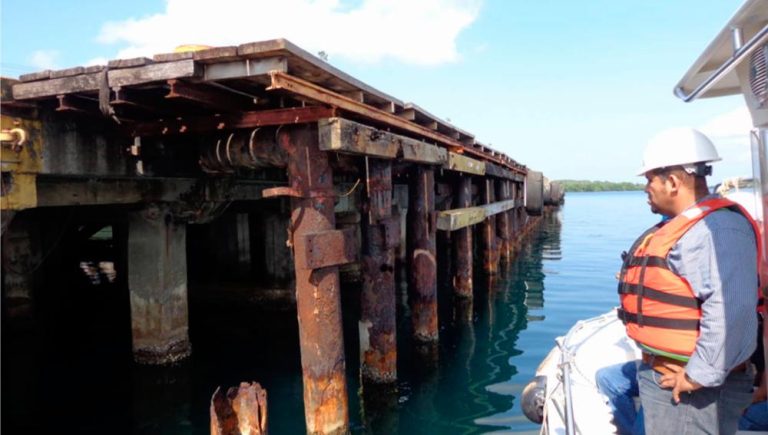
- Check pilings for rot, cracking, or looseness in their footings.
- Inspect decking boards, hardware, and cleats for corrosion or weakness.
Drainage
Make sure weep holes aren’t blocked by sediment, roots, or debris. Blocked drainage is one of the most common — and preventable — causes of seawall failure during heavy rain and surge events, since trapped water builds pressure behind the wall with nowhere to go.
Boat lifts
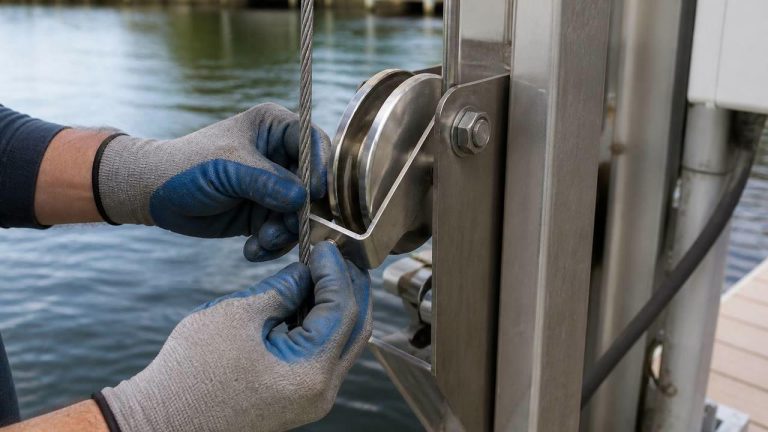
- Test motors, cables, and pulleys for wear.
- Confirm the lift is rated to handle your vessel’s current weight, especially if you’ve upgraded boats recently.
If any of these show real deterioration, it’s worth scheduling a repair before storm season is in full swing rather than after — waterlogged, weakened structures fail more easily under storm stress, and contractor schedules fill up fast once a storm is approaching.
During the Storm: What to Secure
Once a storm is approaching, focus shifts from inspection to protection:
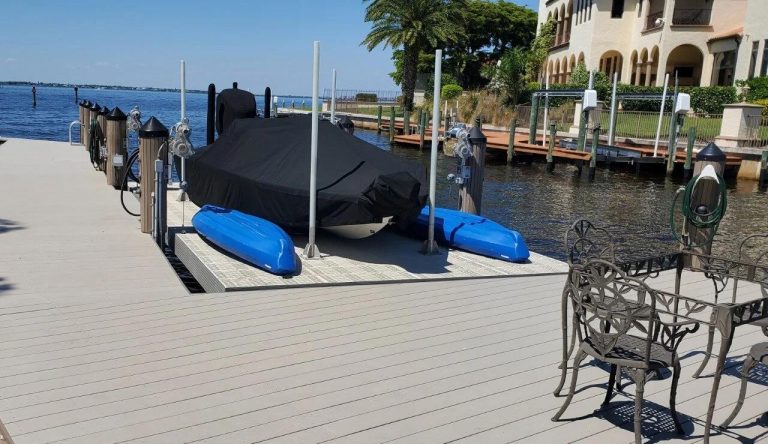
- Remove or secure loose items from docks — furniture, planters, and equipment can become projectiles or fall into the water.
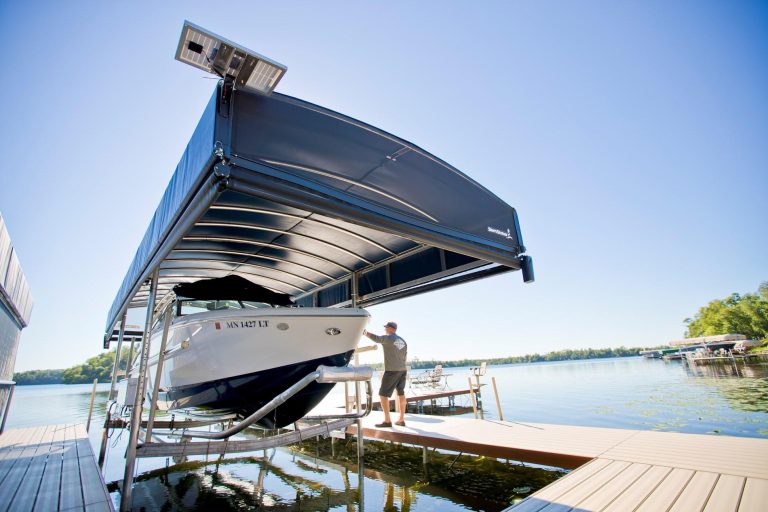
- Raise boat lifts to their highest safe position if you’re not evacuating the vessel.
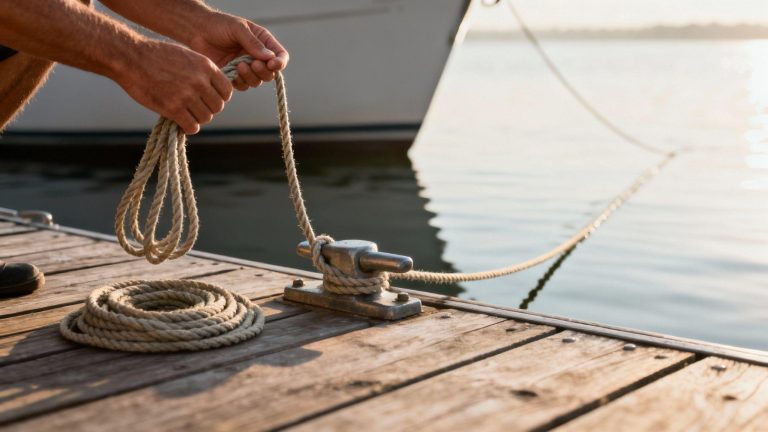
- Double-check dock lines and fender systems if a boat will remain in the water.
- Clear drainage areas near the seawall of any last-minute debris.
For official storm tracking and evacuation guidance, always follow updates from the National Hurricane Center and your local emergency management office.
Post-Storm Inspection: What to Look For
Once it’s safe to return to your property, a careful inspection is essential — even if everything looks intact from a distance.
Seawall
- Look for new cracks, leaning sections, or visible separation between panels.
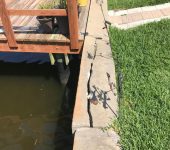
- Check for soil loss or sinkholes forming behind the wall, which often show up as depressions in the yard near the seawall.
- Watch for water pooling in unusual places, which can indicate a breach or drainage failure.
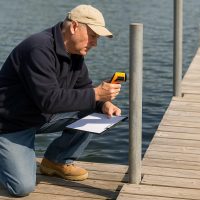
Docks and pilings
- Look for pilings that have shifted, tilted, or pulled away from the dock structure.
- Check for cracked or missing decking, loose hardware, and any structural racking (a dock that no longer sits level or square).
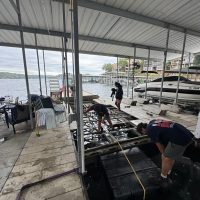
Boat lifts
- Inspect cables, motors, and pilings for storm damage.
- Test the lift’s operation carefully before placing a boat back on it.
A word of caution: storm damage isn’t always visible right away. Erosion behind a seawall can continue for weeks after a storm as water works its way through weakened soil, and a wall that looks stable immediately after a hurricane can shift or fail later. If your property took on storm surge or you’re unsure whether a structure is sound, a professional marine inspection is the safest next step — especially before putting weight back on a dock or lift.
Why a Professional Inspection Matters
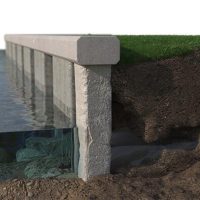
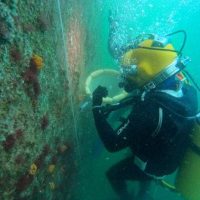

DIY inspections are a good first step, but marine structures hide a lot below the waterline. A professional inspection can identify issues that aren’t visible from land, including:
- Undermining or voids beneath the footing
- Deterioration of tie-backs and anchoring systems below grade
- Structural stress that hasn’t yet produced visible cracking
Catching these issues early — before or after a storm — is almost always less costly than waiting for a full failure.
Trust South Florida Seawall for Storm-Ready Marine Construction
South Florida Seawall has spent over 25 years helping waterfront homeowners, marinas, and businesses across Broward and Palm Beach counties prepare for and recover from hurricane season. Our team provides thorough seawall inspections, concrete and vinyl seawall repair, dock construction and repair, and boat lift installation and repair — all backed by licensed, insured craftsmanship and a 100% satisfaction guarantee.
Whether you need a pre-season inspection in Fort Lauderdale, storm damage assessment in Pompano Beach, seawall repair in Boca Raton, or dock repair in Delray Beach, our team is ready to help you protect your waterfront investment before the next storm — and get it back in shape after one.
Don’t wait until the water rises. Contact South Florida Seawall today at (754) 732-9255 to schedule your hurricane season inspection.